




U.S. President Donald Trump said a peace deal with Iran could be signed on Sunday, setting up a direct clash with Tehran over the timing of the agreement.
Summary
- Trump said a U.S.-Iran deal could be signed Sunday, but Tehran rejected that exact timeline.
- Hormuz reopening could ease energy pressure and support risk appetite across Bitcoin and crypto markets.
- ETF outflows and Galaxy’s lower BTC floor keep crypto traders cautious despite peace deal hopes.
The claim drew attention across crypto markets because the draft deal is expected to reopen the Strait of Hormuz. Traders are watching whether lower energy stress could send capital back into Bitcoin and other risk assets.
“The Deal is scheduled to get signed tomorrow,” Trump wrote on Truth Social on Saturday. He added that the “Hormuz Strait is OPEN TO ALL” immediately after the signing.
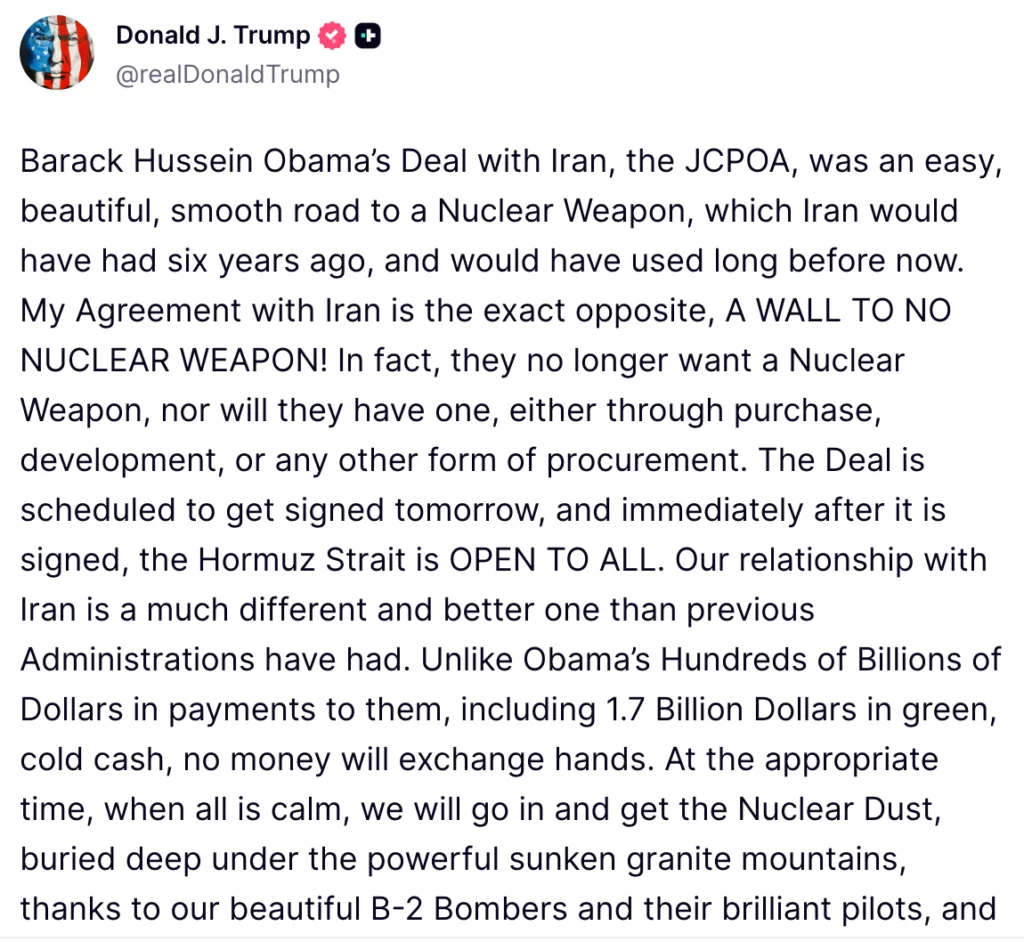
Pakistan also signaled that talks had moved close to a deal. Prime Minister Shehbaz Sharif said the final text had been reached and that an electronic signing could happen within 24 hours.
Tehran disputes the timeline
Iran has not confirmed Trump’s Sunday schedule. Foreign Ministry spokesperson Esmaeil Baghaei told state media that the memorandum would not be signed on Sunday, but could still move forward later.
“We will have to wait and see about the exact date,” Baghaei said, adding that “it will not be tomorrow.” His statement kept uncertainty in place even as mediators pointed to progress.
Hormuz reopening remains central
The Strait of Hormuz is one of the world’s most important energy routes. U.S. Energy Information Administration data showed that about 20% of global petroleum liquids consumption moved through the passage in 2024.
A reopening would matter for oil, LNG, inflation expectations, and risk appetite. Higher energy costs have weighed on global markets for months and have added pressure to crypto during periods of ETF outflows.
Bitcoin traders watch risk demand
Crypto analyst Michaël van de Poppe said a confirmed peace deal could support Bitcoin and other risk assets. “Liquidity will pour back into risk-on assets,” he wrote, adding that crypto could benefit after the SpaceX IPO absorbed attention.
Bitcoin traded near $64,213 on Sunday, after rising about 0.8% over the previous close, per crypto.news market data. Spot Bitcoin ETFs also remained under watch after about $315.84 million in weekly net outflows, according to SoSoValue data
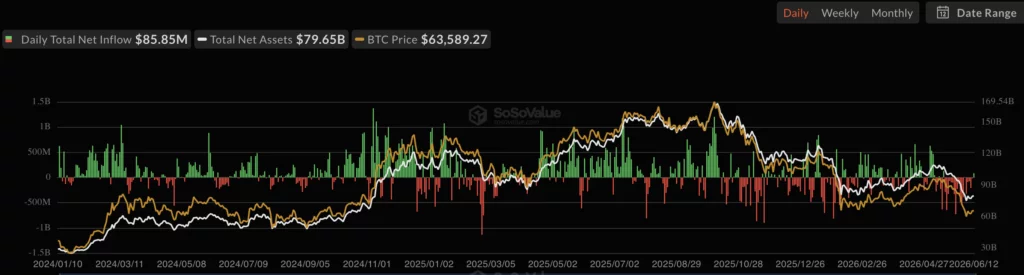
As previously reported by crypto.news, recent market updates tied Bitcoin’s weakness to ETF withdrawals, U.S.-Iran tension, and the competition for capital created by the SpaceX offering. Separate reporting cited Galaxy Research, which said only four of 13 Bitcoin bottom signals had triggered.
Galaxy’s base case placed a possible BTC floor between $40,000 and $46,000 by late 2026. That outlook keeps traders cautious, even as peace deal hopes raise the chance of a short-term relief move.
The next market reaction may depend on whether the U.S., Iran, and Pakistan confirm the same signing timeline. Until then, Bitcoin remains tied to headlines from Hormuz, ETF demand, and wider investor appetite for risk.
A signed deal may ease one source of pressure, but traders still need stronger fund flows before calling a durable recovery. Oil prices and ETF data will be the next checkpoints for short-term crypto positioning.
Disclosure: This article does not represent investment advice. The content and materials featured on this page are for educational purposes only.